

Is Traditional SEO Dying? How AI Search Is Changing the Future of Online Visibility
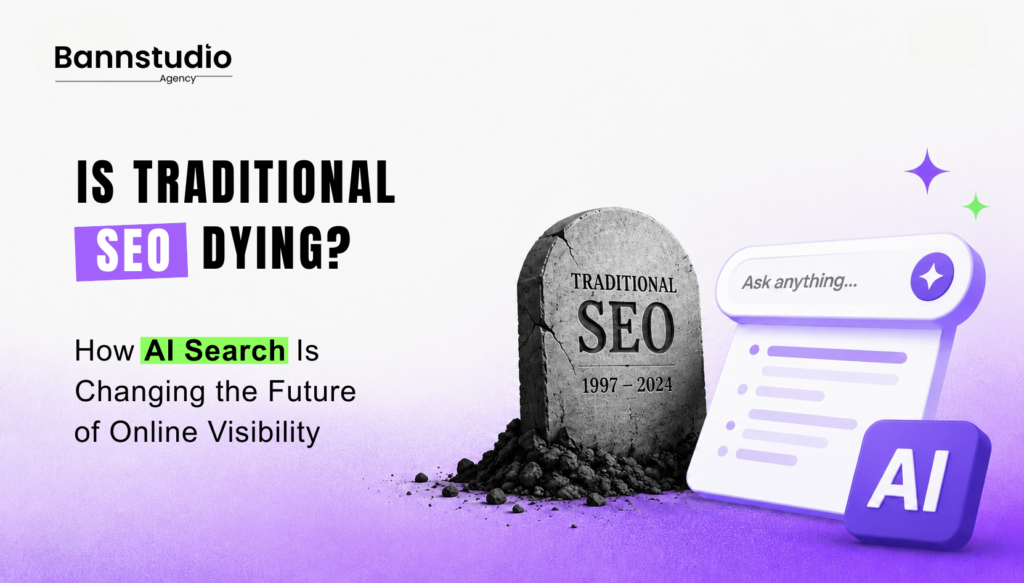
SEO was always considered a fairly natural process that involved the creation of good content, targeting appropriate keywords and getting backlinks. But all that is now changing in 2026 due to many reasons. The advent of AI Overviews, AI Mode, as well as the rise in use of platforms such as ChatGPT, Gemini, Claude and Perplexity has changed the game. In 2026, people do not have to navigate several websites to find their answers. Instead, they get direct answers from the AI-powered results. As a result, a lot of companies have started wondering: Is traditional SEO dead? Fortunately, the answer to this question is negative. SEO just evolves at a breathtaking pace nowadays. Emergence of AI Search Google has been actively incorporating AI technology in the search experience during the last two years via AI Overviews and AI Mode. These solutions generate direct summaries within Google search results, often answering a user’s query without requiring him/her to visit the actual website. Meanwhile, millions of users are turning to chatbots and AI search platforms to do their research. Thus, there is a trend emerging when the concept of SEO visibility is extended to being mentioned in the AI answers. Why are Businesses Focused on This Problem? One of the key problems facing businesses is traffic generation. According to research carried out by the Pew Research Center, users are less likely to click links from traditional websites where an AI summary is provided in the Google Search engine. The research also found out that even clicks on cited sources within AI summaries are relatively rare. This presents a challenge to businesses and publishers who rely on organic traffic. They are forced to compete for visibility in AI search responses instead of fighting for ten blue links. Traditional SEO Isn’t Going Anywhere It may sound contradictory but traditional SEO is still critical. In May 2026, Google came out with updated guidance indicating that concepts like Generative Engine Optimization (GEO) and Answer Engine Optimization (AEO) don’t negate traditional SEO. According to Google, the same search systems that generate rankings also power AI search experiences. Therefore, businesses need to maintain: Failure to meet these criteria makes it difficult for any search engine and AI systems to access and trust your content. What Is Changing? It’s crucial to understand that search engine optimization is becoming more challenging. The main difference is the shift of AI search focus from searching for keyword-optimized content to supporting human-related content which must include: It seems like according to Google AI search guide, “it’s not about optimizing keywords anymore.” In fact, the algorithm favors content that offers value to the end-user. That means companies should not rely on hundreds of keyword-based articles to get good search positions. Welcome to GEO: Generative Engine Optimization One of the SEO trends of 2026 is Generative Engine Optimization (GEO). As opposed to SEO, GEO deals with making brands visible in AI search engines such as ChatGPT, Gemini, Perplexity, and Google AI Overviews. GEO is focused on citations rather than rankings. Here are some characteristics of successful GEO practices: Ultimately, the idea is to become a trustworthy source for AI systems. What Businesses Should Do in 2026 Rather than choosing between SEO and AI optimization, companies should look at both. In the future, brands will dominate that: As Google has repeatedly stated, useful content is and will remain the best SEO ranking factor regardless of whether a user encounters it via a traditional search result or an AI search experience. The early movers will have an advantage in a continuously evolving field. Conclusion SEO isn’t dead. It’s evolving. SEO is more than just the conventional SEO element, but it also involves search visibility, AI citations, and brand reputation. Although AI Overviews and AI Platforms are changing the information consumption process of the user, it should be noted that these platforms are extremely dependent on content available online. The brands who will dominate in 2026 will not be those who chase after the algorithmic changes; it will be those who create content and demonstrate their expertise. SEO has not died. It has only become smarter. FAQS Q1: Is SEO still relevant in 2026? A: Yes. SEO continues to be important since artificial intelligence-based search engines continue to use website content and search indexes to formulate answers. Q2: What is GEO? A: GEO involves optimizing content for citation by artificial intelligence-based search platforms including ChatGPT, Gemini, Claude, Perplexity, and Google AI Overviews. Q3: Are AI Overviews decreasing website traffic? A: It has been found through research that users tend not to click on conventional search results where there is an artificial intelligence summary. Q4: Should a business invest in GEO or SEO? A: A business must concentrate on both. While SEO forms the base, GEO enhances the visibility of the business in AI-based search engines. Q5: How do you make sure your brand is visible in AI search? A: By creating unique, credible content, establishing topic authority, and building brand recognition.