

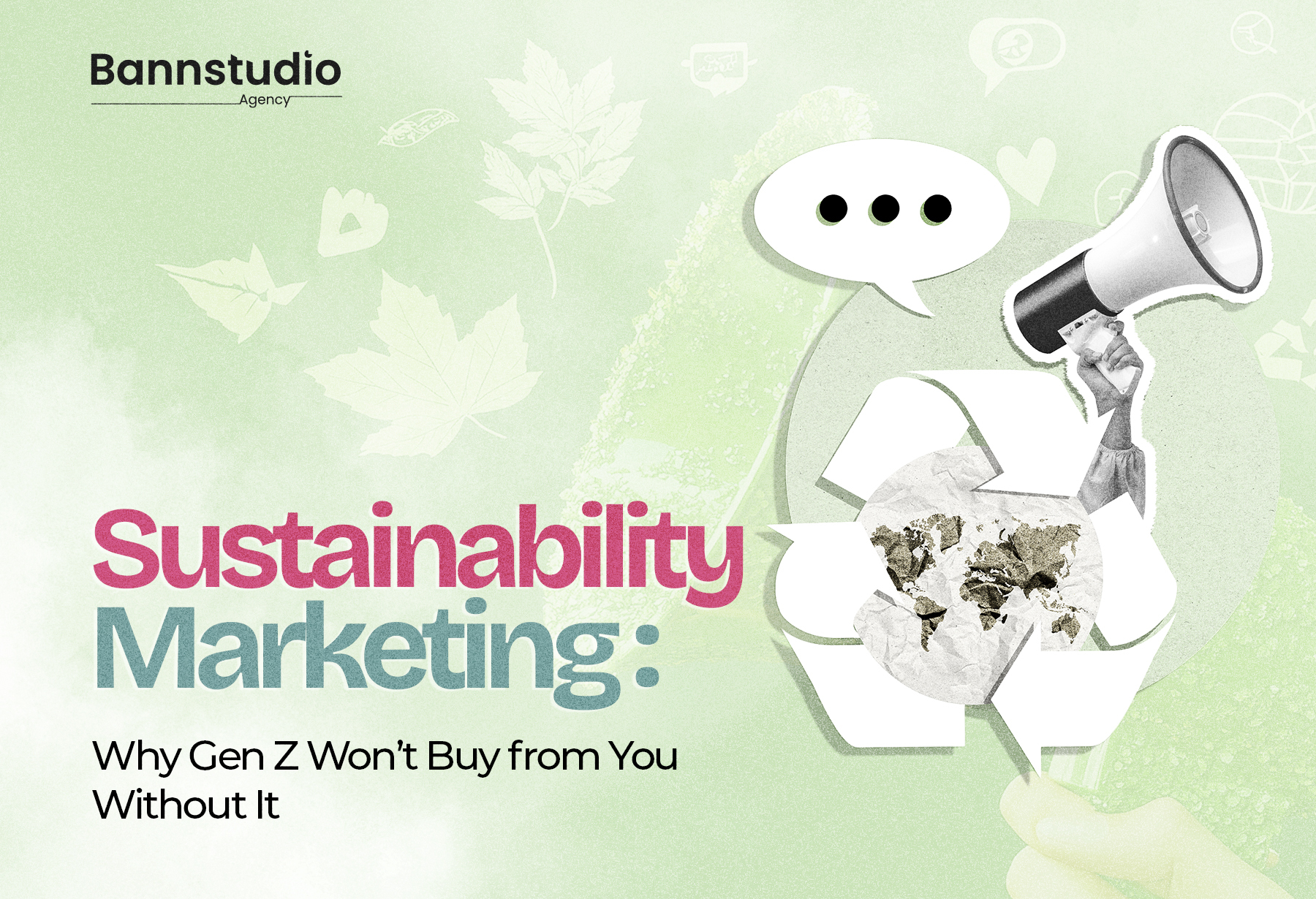



In 2026, brands will have to face an undeniable fact: Sustainability is not a “nice-to-have” any more. It’s a business key, especially when selling to Gen Z. This digital platform, socially-conscious generation expects transparency, purpose and real impact. If your marketing does not show a serious commitment to sustainability, Gen Z won’t just ignore you, they will avoid buying from you.
This is a shift we’ve witnessed first hand at Bannstudio. Progressive brands are repositioning themselves in the market through making sustainability a part of every interaction with their customers. Here’s why sustainability marketing isn’t simply nice to have, it’s must for gaining Gen Z trust and loyalty.
Why Gen Z Is More Concerned Than Any Generation Before It
Gen Z, those ages roughly 10 to 29, the generation that has come of age amid climate uncertainty, social justice movements and digital transparency. They have:
- The availability of information – So greenwashing no longer passes the sniff test.
- Raised ethical expectations – they connect purchases with values.
- An aspiration for impact – not just products.
Industry research shows that more than 70% of Gen Z want to develop relationships with brands who contribute to the environment or society in a meaningful way.
What is Sustainability Marketing – The Definitive Guide
Sustainability marketing doesn’t mean striking a recycling emoji on your Instagram posts. It’s about:
Transparency
How and where your products are made. What are your supply chains? Who are your partners? What materials do you use? Gen Z expects real answers, not undefined statements.
Accountability
Display the gains and the pains. The brands that outlast are the ones that do not merely celebrate success, they recognize where improvement is necessary.
Purpose-Driven Storytelling
It should be something meaningful, authentic and integrated into the story of your brand, not an afterthought.
Why Authenticity Beats Buzzwords Every Time
Plenty of companies make the mistake of tacking on the word inside a marketing label — “eco-green,” “responsibly sourced” without actually providing any real proof.
Gen Z sees through:
- Hollow claims
- Fake certifications
- Misleading visuals
This generation reverse engineers the brands they are purchasing from scoping out third-party reviews, certifications and employee testimonials. If the sustainability feels unreal, the credibility of your brand will lose overall value.
How to Build a Sustainability Marketing Strategy That Works
Here is the tried and true path we follow at Bannstudio:
1. Audit Your Real Impact
Start internally. How environmentally friendly and fun are you? What can be improved? What can be championed?
2. Set Measurable Goals
Gen Z wants to see specifics. Be ready to answer:
“How many fewer pounds of carbon did we produce this year?”
“Where is our product manufactured?”
“Who benefits from our initiatives?”
3. Share Real Stories
Share stories of human beings, factory workers and innovators and how your brand makes lives better or saves our planet.
4. Give Proof
Rely on data, certifications and transparent reporting. It builds trust.
5. Integrate Sustainability Into Your Brand DNA
It can’t survive in a campaign. It must be alive in your product design, operations and community engagements.
The Competitive Edge for 2026 and Beyond
When sustainability is done well, it is about differentiation. It:
- Builds stronger emotional connections
- Boosts customer loyalty
- Attracts Gen Z brand ambassadors
- Drives word-of-mouth in digital communities
This isn’t hypothetical. Businesses that make sustainability a deep part of their marketing strategies outperform those who don’t particularly among young consumers.
Frequently Asked Questions (FAQs)
Q1: What is sustainability marketing?
A: Sustainability marketing is marketing with a focus on promoting your brand’s products and services based on environmental benefits or social value, not just features. It’s about honesty, responsibility and long-term effect.
Q2: Why is Gen Z so concerned about saving the planet?
A: Gen Z came of age with climate crises, global inequality and social media transparency. They are taking decisions based on values and they expect brands to mirror that.
Q3: Can small brands afford to market around sustainability?
A: Yes , but it has to be real, Small brands can disrupt their way to success by using purpose and storytelling and engaging the community.