

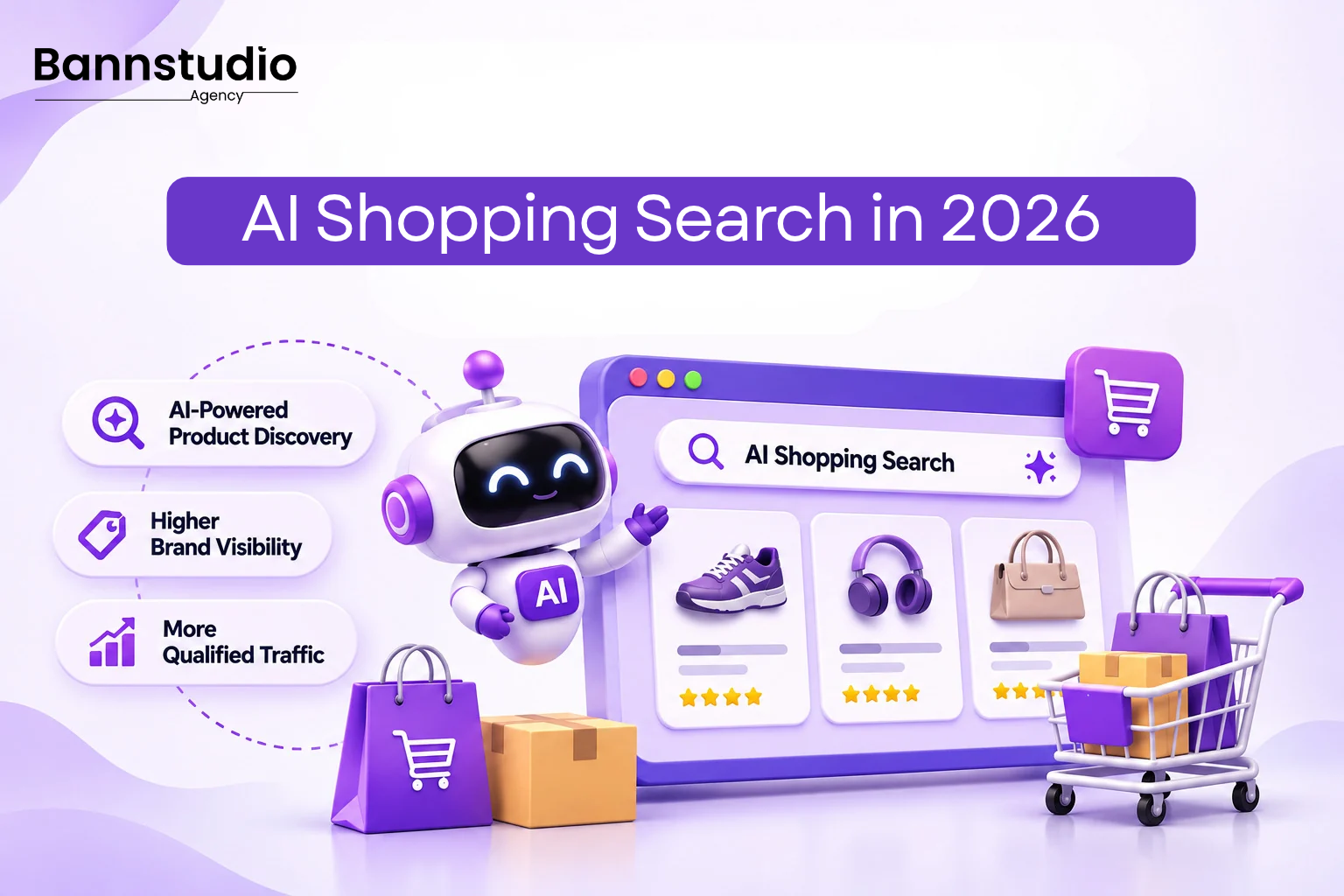






A customer may be interested in finding out about the best skin care products for dry skin, cost-effective home décor ideas for a small apartment or protein bars without any added sugar. This could be accomplished with just one request to ChatGPT instead of searching through many websites.
This is how the process of discovering new products online is being transformed. E-commerce businesses need to focus not only on ranking better on different search engines but also on how well their products will perform on AI shopping platforms.
To increase your online footprint, a collaboration with a digital marketing agency in Gwalior would be a good solution to integrate SEO, relevant content and product optimization into the modern AI world.
What Is AI Shopping Search?
With AI shopping search customers can discover and compare products via conversational searches and AI suggestions.
Such services as ChatGPT, Google AI Mode, and Gemini can assist users in exploring different products according to their budget, preferences and other requirements. AI shopping search uses available product data such as price, features, etc. to narrow down the list of options.
It means that your products should be easily comprehensible, have an accurate description and useful information.
Why AI Product Discovery Is Relevant in 2026
AI becomes one more channel of product discovery experience. Consumers may resort to AI to research a category, evaluate the alternatives and shortlist a brand before entering the ecommerce site.
This brings a number of benefits for ecommerce companies:
- New discovery channels: Product will feature in AI-driven suggestions in addition to search engine recommendations.
- More advanced search terms: Consumers will be able to describe their needs in detail, including budget and product features.
- Improved product descriptions: Specifying details will allow consumers and search engine to know better the product value proposition.
- More metrics for tracking performance: It will be possible to trace AI recommendations and product conversions in case analytics tool supports such metrics.
For a branding company in Madhya Pradesh, this means even more reason to have a clear digital identity as consumers will be able to learn about the brand and its products from reliable sources.
Examples of Real Brands Seen through AI Product Discovery
Several brands and published case studies offer useful examples of how AI visibility is being measured. Their results are encouraging, although they come from specific studies and should not be treated as guaranteed outcomes for other businesses.
Indian Brands Already Appearing in AI Search Research
Several Indian brands have featured in published AI-visibility studies and case studies. Their results offer practical lessons, although the figures below come from specific audits or agencies and are not universal rankings.
1. Little Bansi: Building AI Visibility for an Indian D2C Brand
Little Bansi, an Indian children’s ethnicwear brand, features in a case study published by YARD AI Agency. The agency reports that its work helped the brand gain visibility across ChatGPT, Perplexity, Claude, Gemini and Bing. It also reports 3.5 times revenue and a 44% reduction in customer acquisition cost.
The reported results cover a broader strategy involving AI-search optimisation, content and performance marketing. They should not be attributed to AI visibility alone.
What other brands can learn: Smaller businesses can explore AI discovery by improving product pages, answering customer questions and building relevant content around their category.
2. Minimalist: Making Skincare Information Discoverable
Indian skincare brand Minimalist was identified as the most visible Indian D2C brand in the skincare and beauty category in the March 2026 Cited Index, with a reported AI citation rate of 83%. The index measured how often brands appeared in responses to non-branded shopping-intent prompts across AI platforms.
This is a useful example of why specific product information matters in skincare. Customers often compare ingredients, skin types, concerns and product suitability before purchasing.
What other brands can learn: Explain ingredients, product benefits, usage instructions and limitations clearly. Helpful information gives customers more ways to assess whether a product meets their needs.
3. Urvann: Helping Customers Discover Plants Online
Urvann is an Indian online plant retailer selling plants, pots and gardening supplies. A case study published by WebSpero reports a 44% increase in AI citations and a 20% increase in AI mentions following its optimisation campaign.
Plant shopping often involves specific questions, such as which plants suit low-light rooms, how to care for them in Indian weather and which varieties work well in apartments.
What other brands can learn: Organise product information around customer needs and use cases, not just product categories. A plant retailer, for example, can create guides around sunlight, watering, room size and maintenance.
4. Tuco Kids: Improving Visibility for Kids’ Personal Care
Tuco Kids, a Bengaluru-based children’s personal care brand, features in an AirShelf AI case study. The company reports a 24-percentage-point increase in visibility on Gemini and a six-percentage-point increase on ChatGPT after implementing its solution.
The study used a fixed set of 32 queries to measure changes. These are vendor-reported results from a specific benchmark, not a guarantee of similar performance for other brands.
What other brands can learn: Make product information easy to verify. For children’s products, this may include ingredients, intended age groups, usage instructions and safety-related information supported by evidence.
7 Tips to Make Your E-commerce Brand Discoverable by AI Shopping Search
1. Give Detailed Product Descriptions
Don’t limit yourself to just the name of your product and its main benefits. Provide information about the materials, size, features, available variants, intended use and limitations.
For example, instead of “Premium backpack for everyday use” include information about capacity, laptop compartment size, materials and pockets. Details will allow customers to determine whether the product suits their needs.
2. Ensure That Your Product Information Is Correct
Always make sure that the product prices, offers, discounts, available variants and images are up-to-date both on your website and other platforms you sell on.
The outdated information may mislead customers, which will result in a bad buying experience. Don’t forget to check your product feed and merchant listings regularly.
3. Use Structured Data
Structured data like Product or Offer can help search engines understand the information about the product and its price and availability.
Make sure that the markup is in sync with the visual data on the page. Structured data can assist in the search eligibility but won’t guarantee that your product appears in AI recommendations.
4. Publish Useful Buying Guides
Write content that addresses real buying questions – comparisons, sizes, care recommendations, budget suggestions.
For instance, you may describe how to pick the right moisturizer based on the customer’s skin type or suggest interior decorating ideas for a small apartment.
The content strategy of Bannstudio digital agency should focus on informative content rather than just keyword-filled blogs.
5. Optimise Technically
Ensure that product pages are crawlable and indexed. Use descriptive URLs, logical internal linking, sitemaps, image optimization and mobile-friendly design.
A digital marketing agency in Gwalior can help businesses to find and fix technical issues on their e-commerce websites.
6. Build Trust
Show authentic customer reviews, provide contact information, return policy and evidence that supports your product claims.
Do not use fake reviews and false claims. Verifiable information will help customers make informed decisions.
7. Monitor AI Visibility and Conversions
Check organic search performance, product page views, sales and AI referrals identified by your analytics tool.
Also, you may test the set of relevant shopping questions using different AI systems and find out whether your products show up. The tests have to be done recurrently because AI responses differ based on the type of the query.
How SEO, AEO and GEO Work Together
SEO makes it easier for a website to get discovered on search engines. Answer Engine Optimisation (AEO) deals with provision of relevant answers to customer queries, whereas Generative Engine Optimisation (GEO) seeks to promote a brand on the AI-generated recommendations.
All these types of optimization work together in one way or another. They all require a user-friendly website, useful content, correct product information and understanding of customers’ intent.
The most tangible solution for e-commerce brands is the following: to develop SEO foundation and make the information about products useful in conversations.
How Bannstudio Can Assist E-commerce Brands
AI shopping search is creating new opportunities for product discovery but it is dependent on the quality of the brand’s online presence.
At Bannstudio we assist businesses with website development, SEO, branding and digital marketing. These services will help e-commerce brands to improve product pages, website foundation and shopping experience in general.
In addition to helping the companies with establishing a brand image, as a branding agency in Madhya Pradesh, Bannstudio will be able to help with the consistency of the company’s digital identity.
No agency can ensure the appearance in AI recommendations. But accurate product information, helpful content and proper website optimisation can become the basis for the discovery of a company in search engines.
FAQ
AI shopping search allows customers to discover and compare products through conversational queries and AI-generated recommendations.
Brands can strengthen their foundations with help of descriptive product listings, correct product feeds, structure data, useful buying guides and SEO.
Yes. Proper crawling and indexing, relevant content and structured website are important for search engine visibility, even for AI-driven search experience.
GEO stands for Generative Engine Optimisation and describes practices that can improve a brand’s visibility in AI-generated answers and recommendations.
Reels can help customers discover products and engage with a brand. However, posting Reels does not automatically improve AI rankings. AI visibility should be measured separately using relevant platform tests, mentions and referral data.
Bannstudio offers website development, SEO, branding and digital marketing services to help businesses strengthen their online presence and improve their e-commerce foundations.